7 Signs Your Fuse Board May Need Replacing
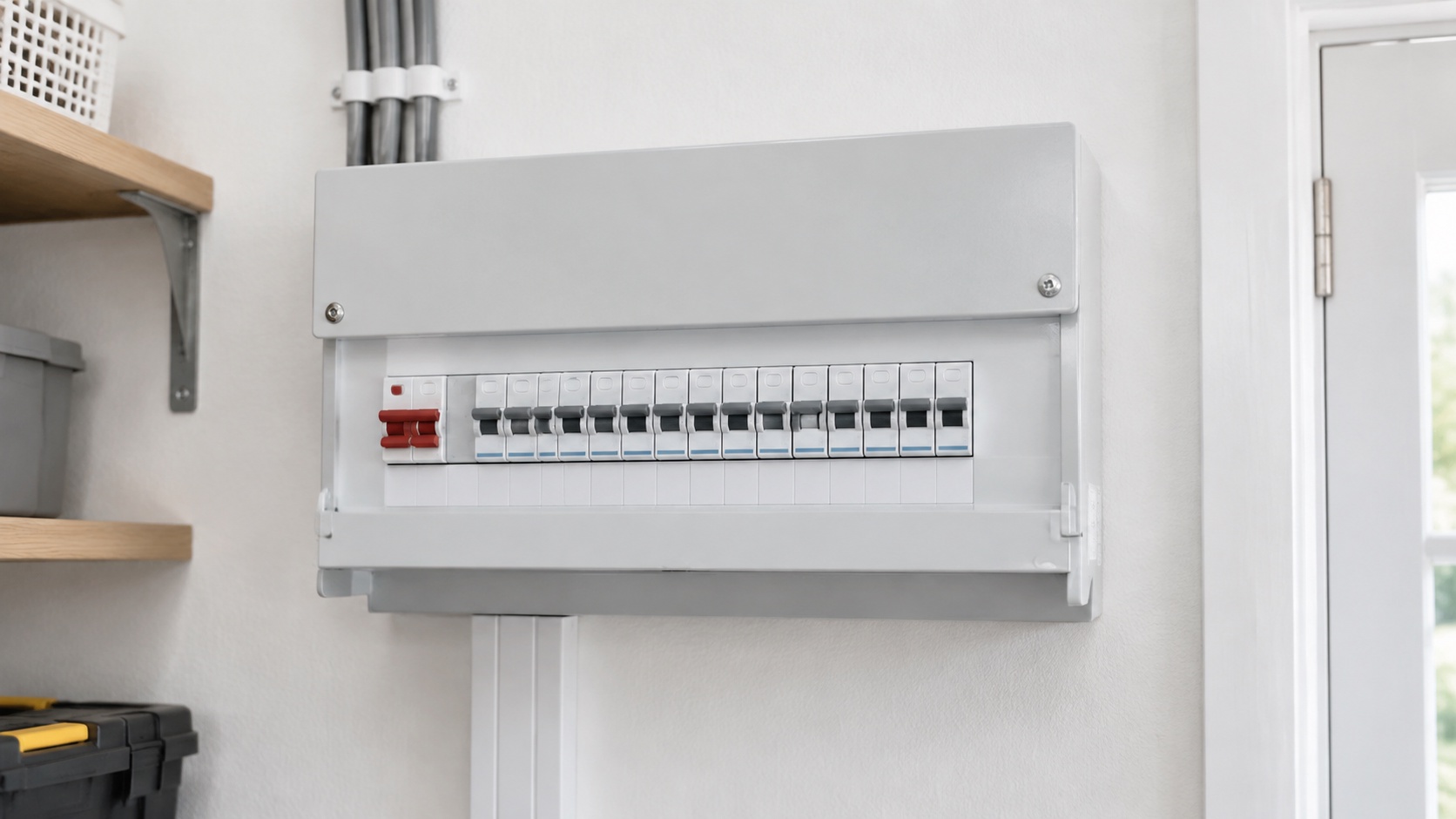
Your fuse board, also called a consumer unit, distributes electricity around the property and contains protective devices. If something changes, it deserves attention, but that does not automatically mean a new board is the answer. The underlying problem may be an appliance, a damaged circuit or an installation defect. An inspection helps separate a repair from a justified upgrade.
1. There are signs of heat or physical damage
Scorching, melting, a burning smell or crackling near electrical equipment are warning signs, not cosmetic issues. Do not remove the cover or touch the equipment to investigate. Keep people away and seek urgent professional advice. If there is smoke, fire or immediate danger, leave the property and call 999.
A damaged enclosure or missing cover can also expose danger. Even if the electricity still works, normal operation does not establish safety. A qualified electrician needs to assess the board, connections and any affected circuits before deciding what can safely remain in use.
2. Circuits repeatedly trip or lose power
A protective device operating is often doing its job. Repeated tripping can indicate a faulty appliance, moisture, damaged wiring or a problem with the installation. It is not proof that the device is worn out, and changing the board without investigating the cause may leave the original fault unresolved.
Note what was being used and which areas lost power, without carrying out electrical work yourself. Tell the electrician whether the problem is intermittent or linked to a particular activity. Do not repeatedly reset a device that immediately trips, bypass protection or replace it with a higher-rated device.
3. Protective devices need reviewing
Residual current devices, or RCDs, provide additional protection against certain electric shock risks by detecting an imbalance in current. An RCBO combines residual current and overcurrent protection for an individual circuit. These devices have different jobs from a simple fuse or circuit breaker.
An older board may have limited RCD protection or none at all. That warrants a professional assessment, especially when alterations are planned, but it does not mean age or appearance alone establishes that the entire installation is unsafe. The electrician should consider the circuits, their use and inspection findings before recommending changes.
4. An inspection identifies defects at the board
An Electrical Installation Condition Report, or EICR, records the condition of the fixed installation within its agreed scope. Findings may relate to the consumer unit, earthing, connections or individual circuits. Ask which observations actually require a board change and which need separate remedial work.
A C1 observation indicates danger present, C2 indicates potentially dangerous conditions, and FI means further investigation is required without delay. A C3 recommendation identifies an improvement rather than, by itself, making a report unsatisfactory. The report should guide a proportionate response; it should not be reduced to a sales label saying that every old board must go.
5. New electrical work needs a different arrangement
An extension, electric vehicle charger or other significant addition may need new circuits or protection that the existing board cannot accommodate appropriately. A board with no spare ways may require a revised arrangement, but the design must consider more than available spaces.
Ask for the proposed circuit design and any related supply checks to be explained. A larger consumer unit does not create extra supply capacity. If the existing circuits have defects, those need attention too: fitting new equipment at the origin will not automatically make all downstream wiring satisfactory.
6. The installation is difficult to identify or maintain
Poor circuit labelling, a mixture of undocumented alterations or uncertainty about the protective devices can make fault finding and future work harder. Missing records are a reason to investigate, not automatic proof that replacement is required. Labels and documentation may be improved without changing the whole unit.
If the electrician identifies unsuitable modifications, damaged components or equipment that cannot be maintained appropriately, replacement may become the sensible option. Ask what evidence supports that recommendation and whether associated wiring or bonding work forms part of the proposal.
7. The board is old and its condition is unknown
There is no universal birthday at which every fuse board must be replaced. Some older installations remain serviceable; others have deterioration, unsuitable additions or missing protection that need addressing. Electrical Safety First specifically notes that older units do not necessarily require upgrading simply because they lack modern features.
If you have moved into an older Solihull or Birmingham property with no recent electrical report, arrange an assessment rather than guessing from the case material or style of switches. A consumer unit replacement is not the same as a house rewire. The electrician should explain which parts of the installation can remain and why.
What to ask before agreeing a replacement
Agree the scope, likely power interruption and any remedial work needed before reconnection. Testing is an important part of the job, and existing faults may be discovered. Ask how unexpected findings will be handled and approved, rather than assuming the quoted price covers unlimited repairs.
After the work, retain the electrical certification and any required Building Regulations documentation. Ask for clear circuit labels and an explanation of the protective devices. If you depend on electrically powered medical equipment or work from home, mention this when planning the appointment.
Common questions
Does an old plastic fuse board automatically need replacing?
No. Its condition, installation context and inspection findings matter. An existing installation is not automatically unsafe just because current standards differ.
Will a new consumer unit stop all tripping?
Not necessarily. A faulty appliance or circuit can still trip suitable new protection. Diagnosis should come before assuming replacement is the cure.
Is a fuse board change the same as rewiring?
No. A board change replaces the distribution equipment. Rewiring concerns circuit cables and associated equipment; either may need additional remedial work.
Further information
- Electrical Safety First: home buyers and consumer units
- Electrical Safety First: EICR classification guidance
General guidance, not a diagnosis of your installation. Electrical work and testing should be carried out by a suitably competent electrician.