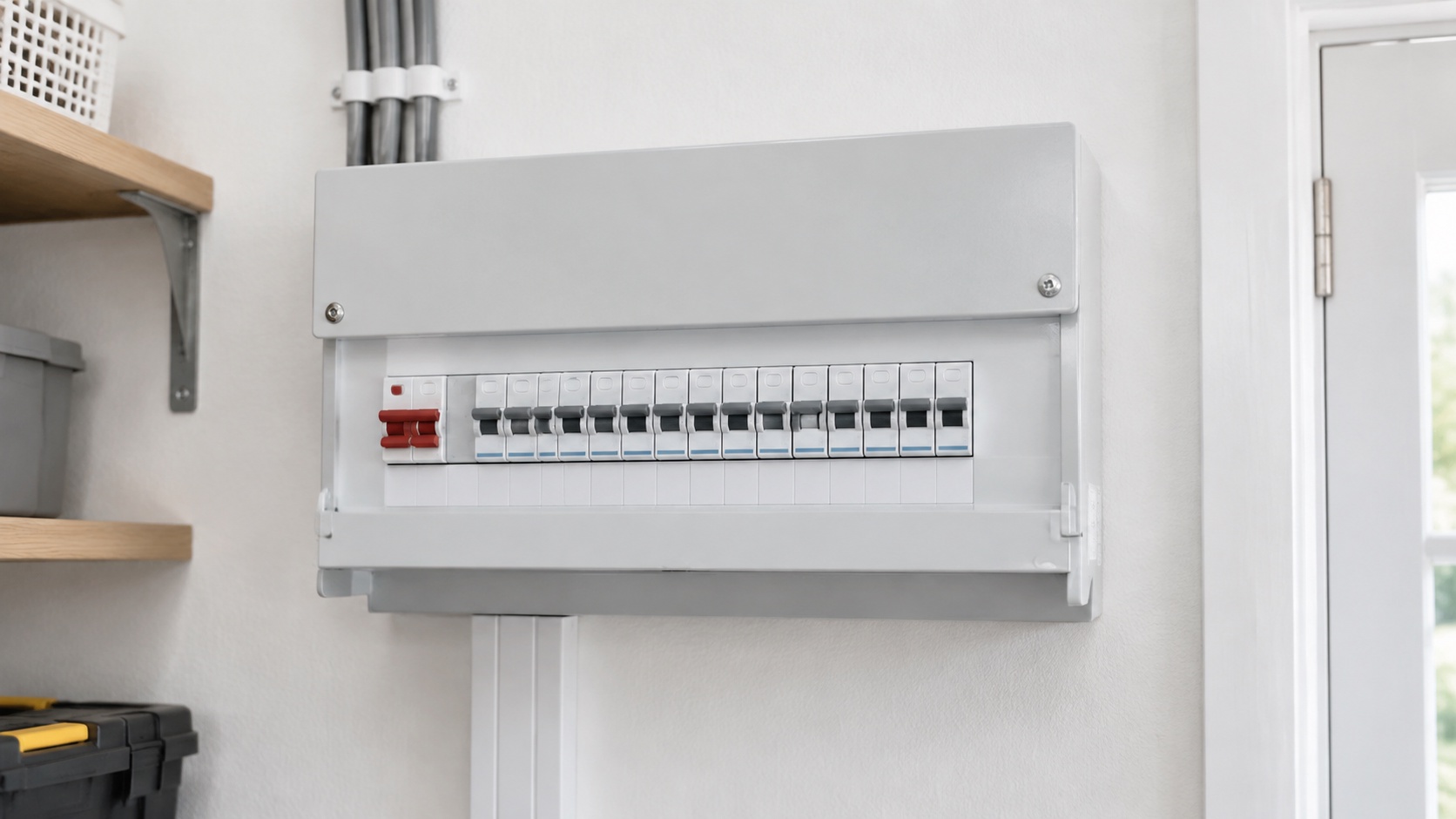
Does Your House Need Rewiring? Signs, Timescales and What to Expect
A house does not need rewiring simply because it is a particular age. The condition of the wiring, previous alterations and how the installation is used matter more than a calendar rule. If you are buying, renovating or experiencing faults, an electrical assessment can establish whether you need repairs, a partial rewire or a more extensive replacement.
Warning signs worth investigating
Repeated tripping, damaged sockets, unexplained loss of power, scorching or a burning smell deserve attention. These symptoms can arise from several causes, including appliances, so they do not diagnose a rewire on their own. Do not open accessories or pull wiring out to identify its age.
Historic wiring materials, unusual accessories or a collection of undocumented additions can be reasons for a closer inspection. A house can also have a mix of newer and older circuits. The visible appearance of a recently replaced socket says very little about the cable behind it.
If there is heat, smoke or an immediate hazard, treat it as urgent rather than waiting for a planned renovation. Keep away from suspect equipment and seek professional help; leave and call 999 if there is fire or immediate danger.
Use an inspection to understand the actual condition
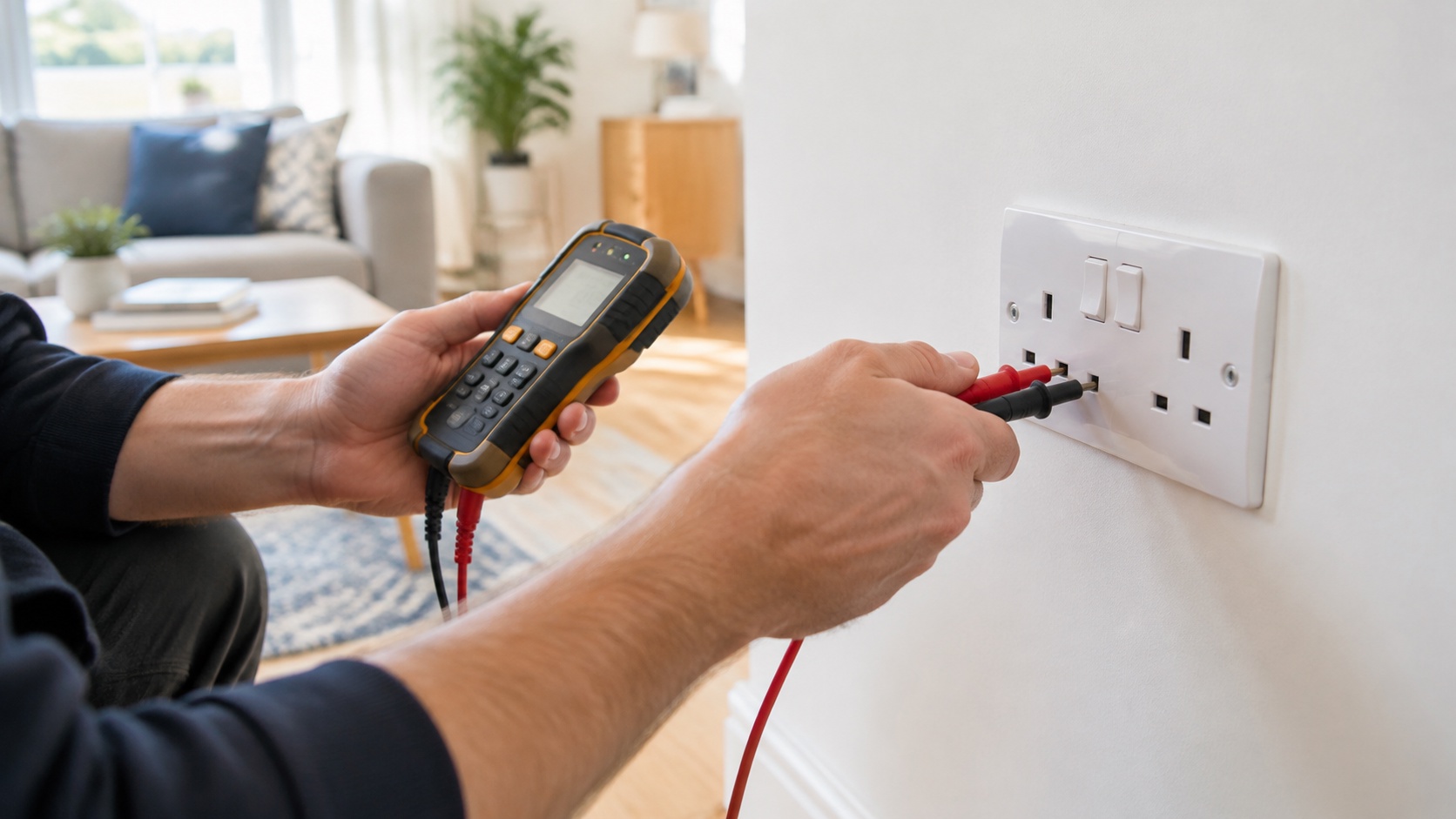
An EICR examines and tests the fixed electrical installation within an agreed scope. It can identify deterioration, defects and areas needing further investigation. It is more informative than a quick glance at the fuse board and is separate from a standard building survey.
Ask the electrician to explain the observations and practical options. Some findings need targeted repairs rather than replacement of every circuit. Conversely, widespread deterioration or unsuitable old wiring may make a rewire the more sensible approach. Restrictions on access or testing should be recorded, so you understand any uncertainty remaining in the report.
Full rewire, partial rewire or improvements?
A full rewire generally means replacing the agreed fixed wiring across the property, with associated accessories and distribution arrangements. A partial rewire addresses defined circuits or areas. Neither term is sufficiently precise on its own for comparing quotes: the written scope should say what is being replaced and what stays.
Adding sockets, changing the consumer unit or upgrading lighting can be separate improvements. They do not automatically renew hidden wiring. If you are planning a kitchen extension or loft conversion, discuss how new work will connect with the existing installation and whether doing wider work together would reduce disruption.
What affects the timescale?
There is no dependable universal number of days for a rewire. Property size, circuit count, construction, access and whether the home is occupied all affect the programme. A clear empty property is very different from an occupied house where rooms must remain usable and furniture needs protecting.
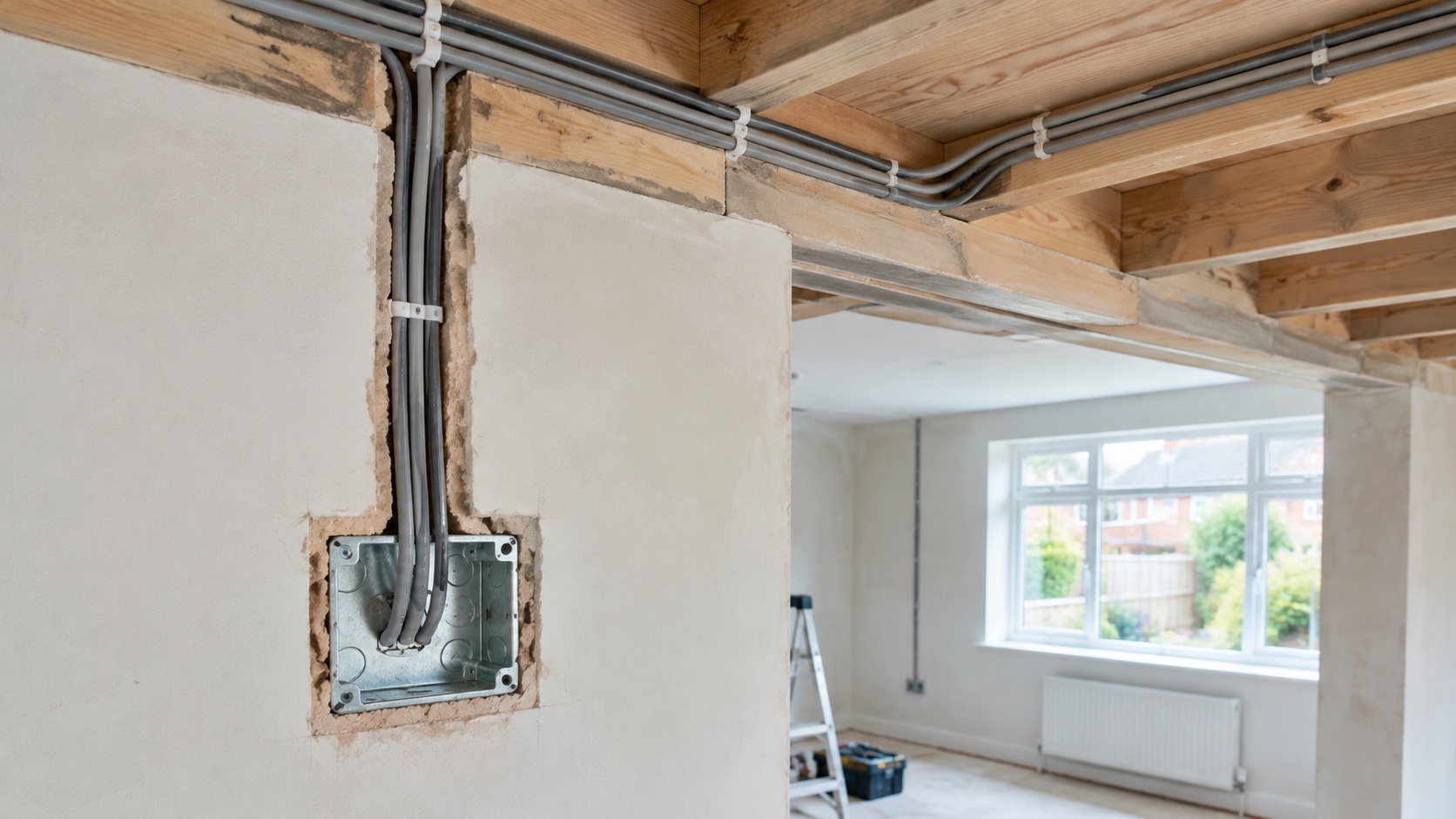
Ground floors, solid walls, tiled rooms and difficult loft access can add work. Coordination with builders, plasterers, decorators or kitchen fitters also matters. Ask for a programme based on the assessment, including any gap between installing cable routes and fitting accessories once other work is ready.
Agree when electricity may be interrupted and whether you can remain in the property safely. Temporary arrangements must be designed and managed by the professionals involved. Tell the electrician about home working, refrigeration, security systems and any equipment that cannot simply be switched off.
Plan the disruption and making good
New cable routes may require access under floors, into ceilings or within walls. This can create dust and damage to finishes. A quote should clarify who moves furniture, protects belongings, lifts and refits floor coverings, repairs plaster and redecorates. These tasks should not be assumed to be included.
If you have recently decorated, ask whether alternative routes are possible and what compromises they involve. In older properties across Solihull and Birmingham, construction details can vary even between neighbouring homes. Protected buildings, suspected asbestos or other access hazards may need specialist advice before disruptive work proceeds.
- Agree which rooms need clearing and where furniture can be stored.
- Discuss children, pets and safe separation from work areas.
- Confirm access hours, key arrangements and any alarm requirements.
- Ask who is responsible for plastering, floor repairs and decoration.
- Record how changes to the agreed scope will be priced and approved.
Decide on useful improvements before work starts
Think about where you actually use appliances, desks and lighting. A rewire is an opportunity to plan sensible socket locations and controls, but the design should not rely on you choosing electrical protection or cable sizes. Those are professional decisions.
Make a room-by-room list of requirements and discuss future plans such as an EV charger, outbuilding or electric heating. Separate essential safety work from optional additions, so the quote remains understandable. Confirm the position and finish of accessories before walls and floors are closed up.
Keep the paperwork at handover
The completed installation needs inspection and testing, with appropriate electrical certification and any required Building Regulations documentation. Ask for an explanation of circuit labels and protective devices. Keep the records with property documents for future maintenance, alterations or a sale.
A finished rewire should have a clear agreed scope, not just a verbal assurance that everything is new. If some existing circuits or equipment were retained, the documents and handover should make that understandable. Message Michael with your property details and plans to discuss the right starting point.
Common questions
Should I rewire before decorating?
If a rewire is needed, coordinating it before final decoration often avoids repeating repairs. Establish the required work through an assessment first.
Can I live in the house during the work?
Sometimes, but it depends on the scope, safe access and power arrangements. Agree a realistic plan with the electrician rather than assuming every room remains usable.
Does a house survey include an EICR?
A standard building survey is not the same as an electrical inspection and testing report. Check the survey scope and arrange an electrical assessment separately if needed.
Further information
- Electrical Safety First: electrical checks when buying a home
- Electrical Safety First: why electrical work needs competent professionals
General guidance, not a diagnosis of your installation. Electrical work and testing should be carried out by a suitably competent electrician.